Florida has hundreds of miles of beach, but the best shelling is concentrated in one stretch: the Southwest Gulf coast, from Sanibel down through Marco Island to the Ten Thousand Islands. Shells pile up here because of the shallow, gently sloping Gulf floor and islands angled to catch what the currents carry in. Here are the beaches worth the trip, including a few you can only reach by boat.
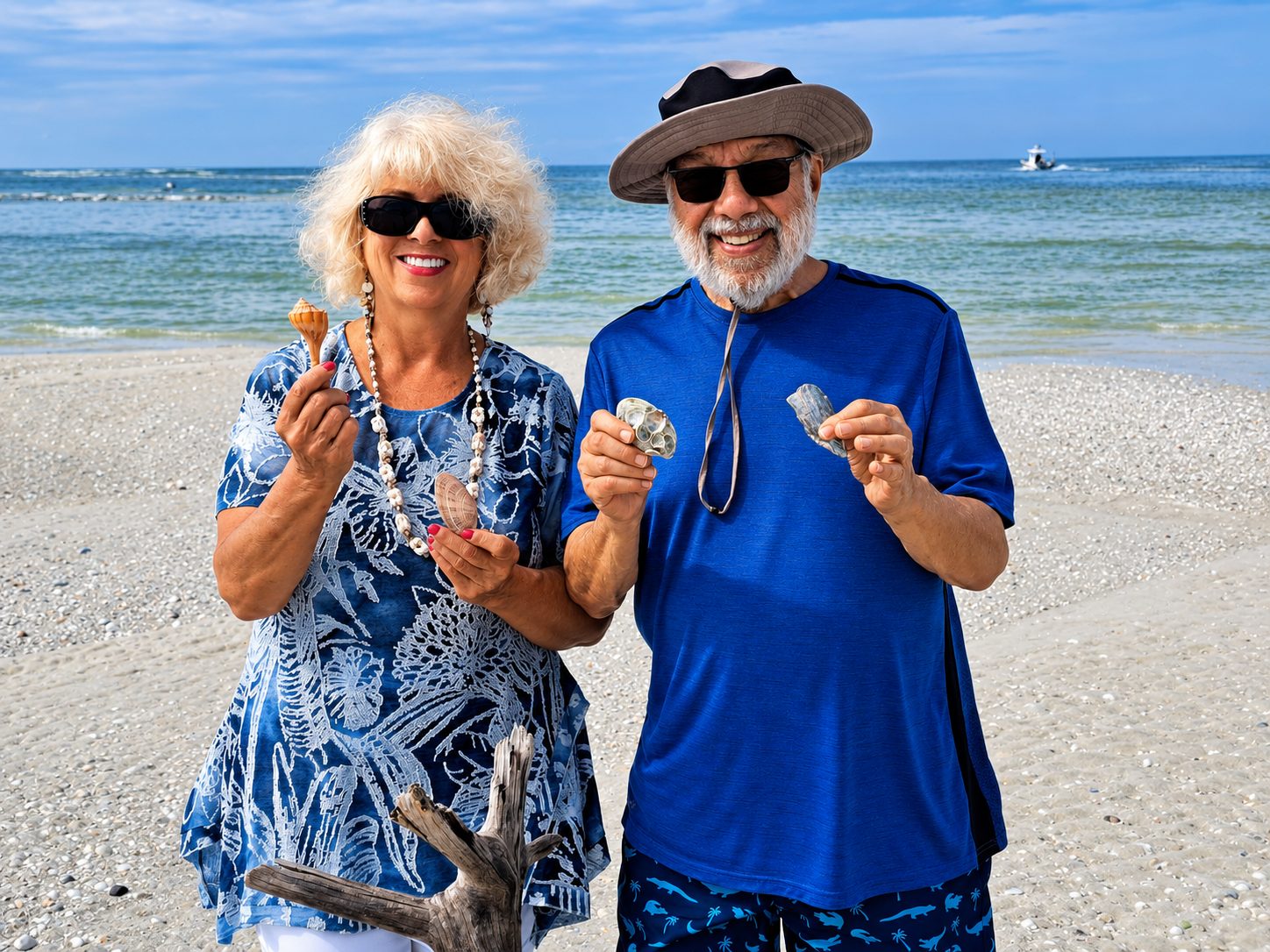
1. Sanibel Island (Bowman's Beach, Blind Pass, Lighthouse Beach)
Sanibel is Florida's shelling capital for a reason. Unlike most barrier islands, it sits perpendicular to the Gulf rather than parallel, so currents carry shells straight onto its beaches, and more than 400 shell species have been recorded here. Bowman's Beach, a 50-acre park on the undeveloped northwest end, is the classic spot for the "Sanibel stoop" (the bent-over shuffle of shellers working the tide line before dawn). Blind Pass and Lighthouse Beach are also favorites, along with Turner Beach on neighboring Captiva.
All of Sanibel's beach parks have reopened after Hurricanes Ian, Helene and Milton. The city still recommends protective footwear because of buried debris.
2. Cayo Costa State Park
Cayo Costa is nine miles of undeveloped beach reachable only by boat or kayak, about four nautical miles west of Pine Island. Fewer people means more shells. As of this writing, the park's ferry service and overnight stays are unavailable, so a private boat is the only way to get there. Check the park's current status before you go.
3. Marco Island: Tigertail Beach and Sand Dollar Island
On Marco itself, Tigertail Beach is the local favorite. Wade across the tidal lagoon (it can be waist-deep) or walk around its north end to reach the sandbar known as Sand Dollar Island, part of the 456-acre Big Marco Pass Critical Wildlife Area. Look for fighting conchs, lightning whelks, and calico scallops. Parts of the sandbar are posted for nesting birds from March 1 through August 31, so stay outside the ropes.
4. Keewaydin Island
Just north of Marco, Keewaydin is about eight miles of barrier island, most of it publicly owned and open to visitors, with no bridge. Olives, conchs and whelks wash up in piles along the tide line. There are no restrooms or lifeguards, so pack everything you need.
5. The Ten Thousand Islands and Cape Romano
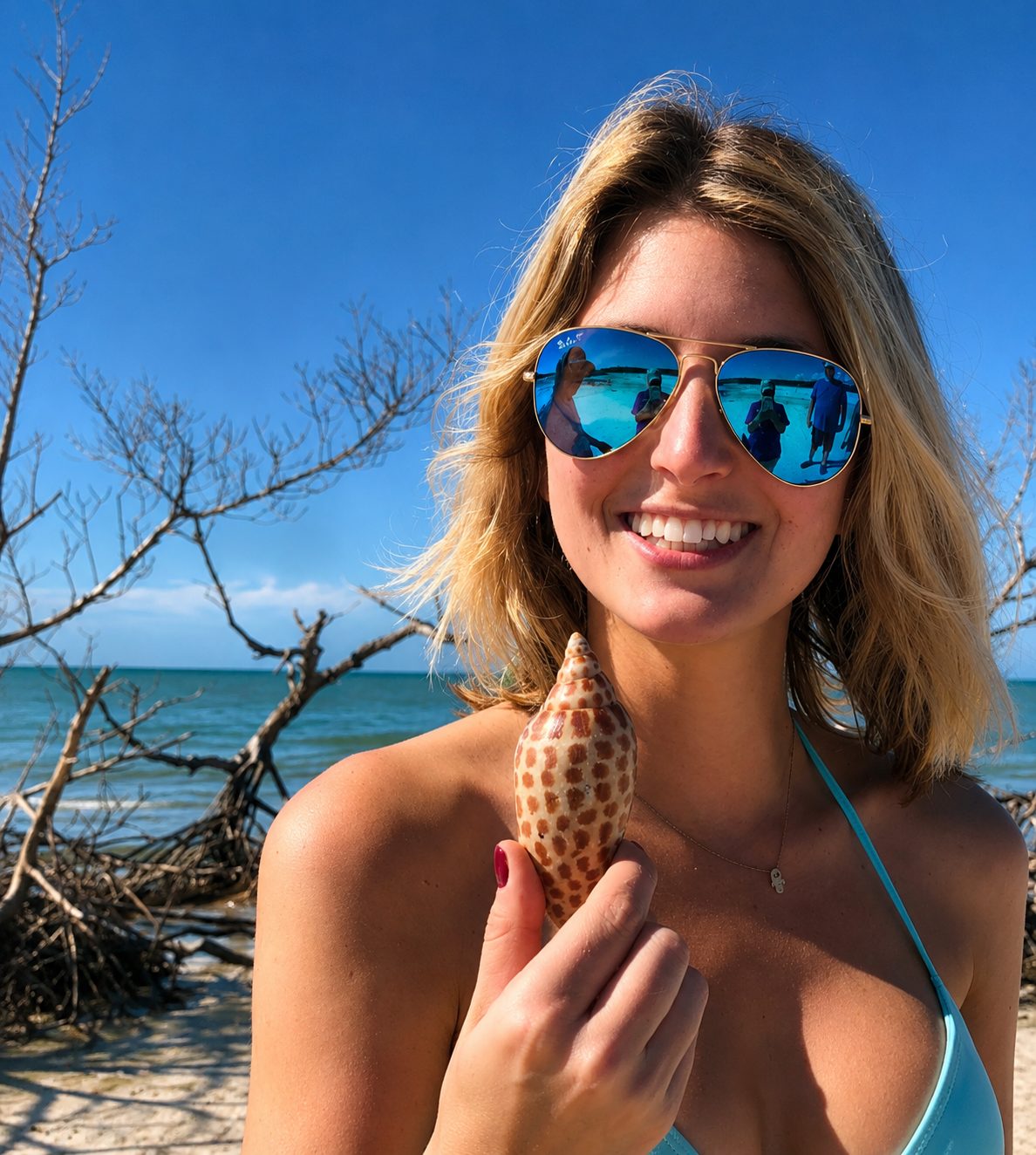
South of Marco, the coast breaks up into the Ten Thousand Islands: hundreds of mangrove islands and sandbars with no roads, no condos, and very few people. The Cape Romano–Ten Thousand Islands Aquatic Preserve covers more than 51,000 acres and lists shelling as one of its activities. Because these beaches are only reachable by boat, they collect shells that never get picked over.
This is where our 3.5-hour 10,000 Islands Shelling Excursion goes. It departs from Goodland and stops at several barrier-island beaches you can only reach by boat. A Florida Master Naturalist guide chooses the beaches based on that day's tides and wind, and helps you identify what you find. If you're boating on your own, watch where you anchor or wade: damaging seagrass in the preserve can bring a fine.
6. Barefoot Beach Preserve (Naples/Bonita)
About a mile and a half of undeveloped beach in a 342-acre preserve. Shellers find cockles, murex, coquinas and sand dollars here. The parking lot fills early from January through April.
7. Caladesi Island State Park
Farther north near Clearwater, Caladesi is reached by ferry from Honeymoon Island or by private boat. It was once named America's Best Beach, and it's known for conchs, whelks and olives. Live shelling is prohibited in the park.
8. Venice (for shark teeth)
Venice calls itself the "Shark Tooth Capital of the World." Fossilized teeth wash up from an old fossil layer offshore. Start around the Venice Fishing Pier and Brohard Park and bring a long-handled sifter (locals call it a "Venice snow shovel").
What you'll find
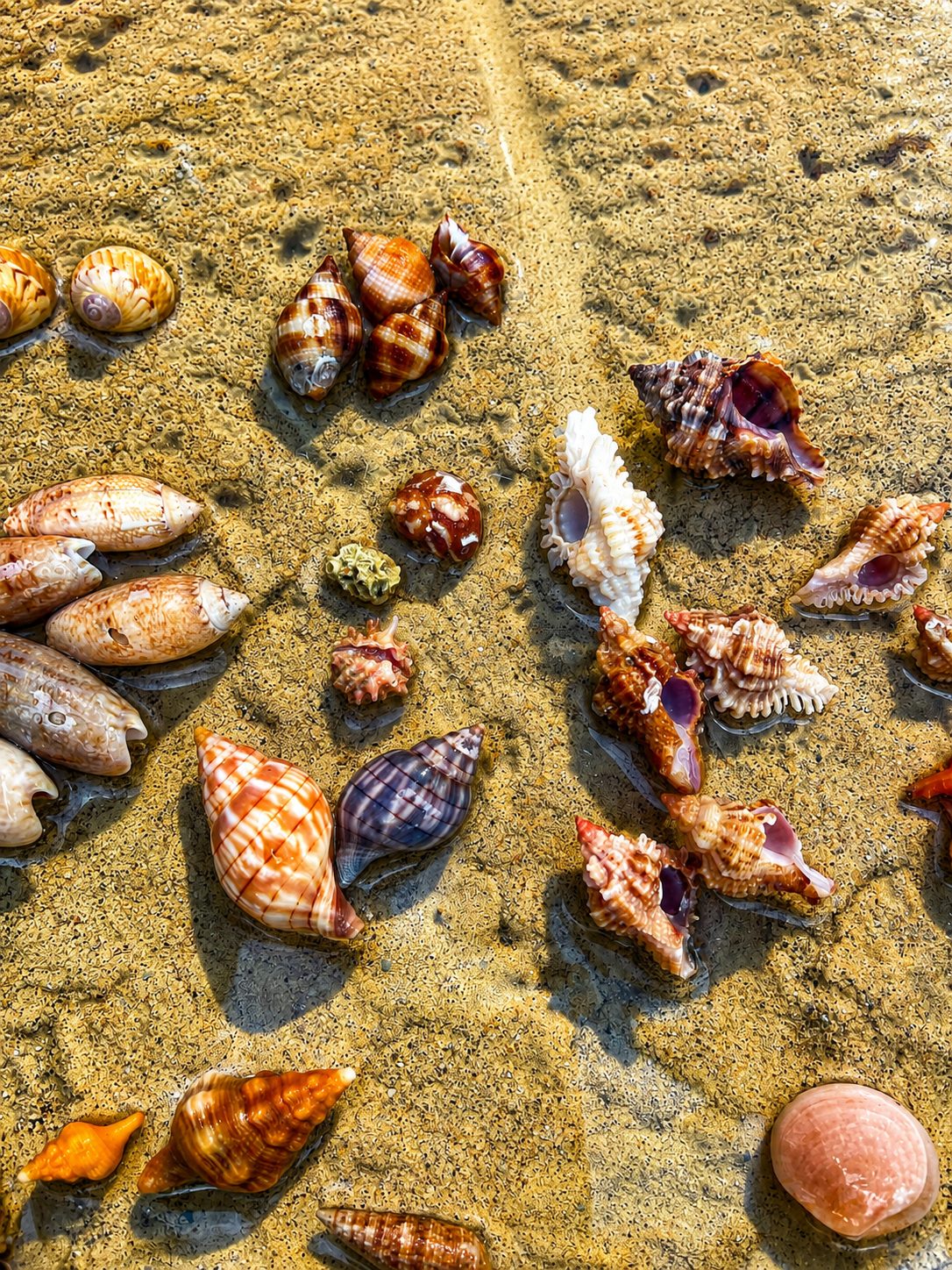
Southwest Florida's signature shells are the "Sanibel Six": lightning whelk, lace murex, alphabet cone, Florida fighting conch, lettered olive, and banded tulip. Cockles, scallops, and coquinas are everywhere. The prize is the rare, spotted junonia. One caution: a live alphabet cone is venomous, so don't handle one with the animal inside.
How to find the good shells
- Go at low tide, early. The first walker on the beach at low tide gets the best of what came in overnight.
- Go after wind. Strong winds and winter storms churn up the Gulf and deliver shells. November through April is prime season.
- Work the wrack line and the shell beds where shells pile up, and look along sandbar edges as the tide drops.
- Bring water shoes and a mesh bag so sand and water drain out.
The live-shell rules
Frequently asked questions
Where is the best shelling in Florida?
Southwest Florida's Gulf coast has the best shelling in the state. Sanibel Island is the most famous, and Cayo Costa, Keewaydin Island, Marco Island's Tigertail Beach, and the boat-only islands of the Ten Thousand Islands are all excellent.
When is the best time to go shelling in Florida?
Go at low tide, early in the morning, and ideally after a strong wind or winter storm stirs up the Gulf. November through April is the best season.
Can you take live shells in Florida?
Only with a Florida recreational saltwater fishing license, and never in Lee County (Sanibel, Captiva and Cayo Costa), where live shells other than a few clams, oysters and coquinas are off limits. Live queen conchs are protected everywhere. The simple rule: if something is living inside, put it back.
Book a Tour
Dolphins, shelling, kayaking, and the Ten Thousand Islands — small groups, reserve online in minutes.
Book NowCompare Tours & Pricing
Four ways to get on the water, from a 1.5-hour manatee trip to a half-day shelling excursion.
Learn MoreReady to get on the water? Call (239) 695-0000 or book online above.